The concept of a parliament is relatively new in Slovenian historical memory. In fact, it only emerged after World War II, specifically with Jože Plečnik’s 1947 proposal for a parliamentary building on Ljubljana Castle Hill. The architect intended to demolish the existing castle complex and replace it with a monumental octagonal structure. However, that same year, a competition was announced for the construction of the assembly building, which was to be located in Tivoli. Edvard Ravnikar’s project received second prize (no first prize was awarded) and has long since faded into obscurity, while Plečnik’s proposal remains a landmark in the development of Slovenian parliament architecture.
Plečnik entered the competition only after the intervention of then Minister of Culture Ferdo Kozak, who worked hard to overcome post-war apathy. Plečnik participated unofficially, placing his building on a different site near the Tivoli pond. The parliament was eventually built more than a decade later (1958–60) based on plans by Vinko Glanz, but Plečnik’s design still lives on in collective memory. His steeply rising tower, the hall with twelve colossal arches, and the symbolic fountain beneath it all reflect his idea of a “cathedral of democracy.”
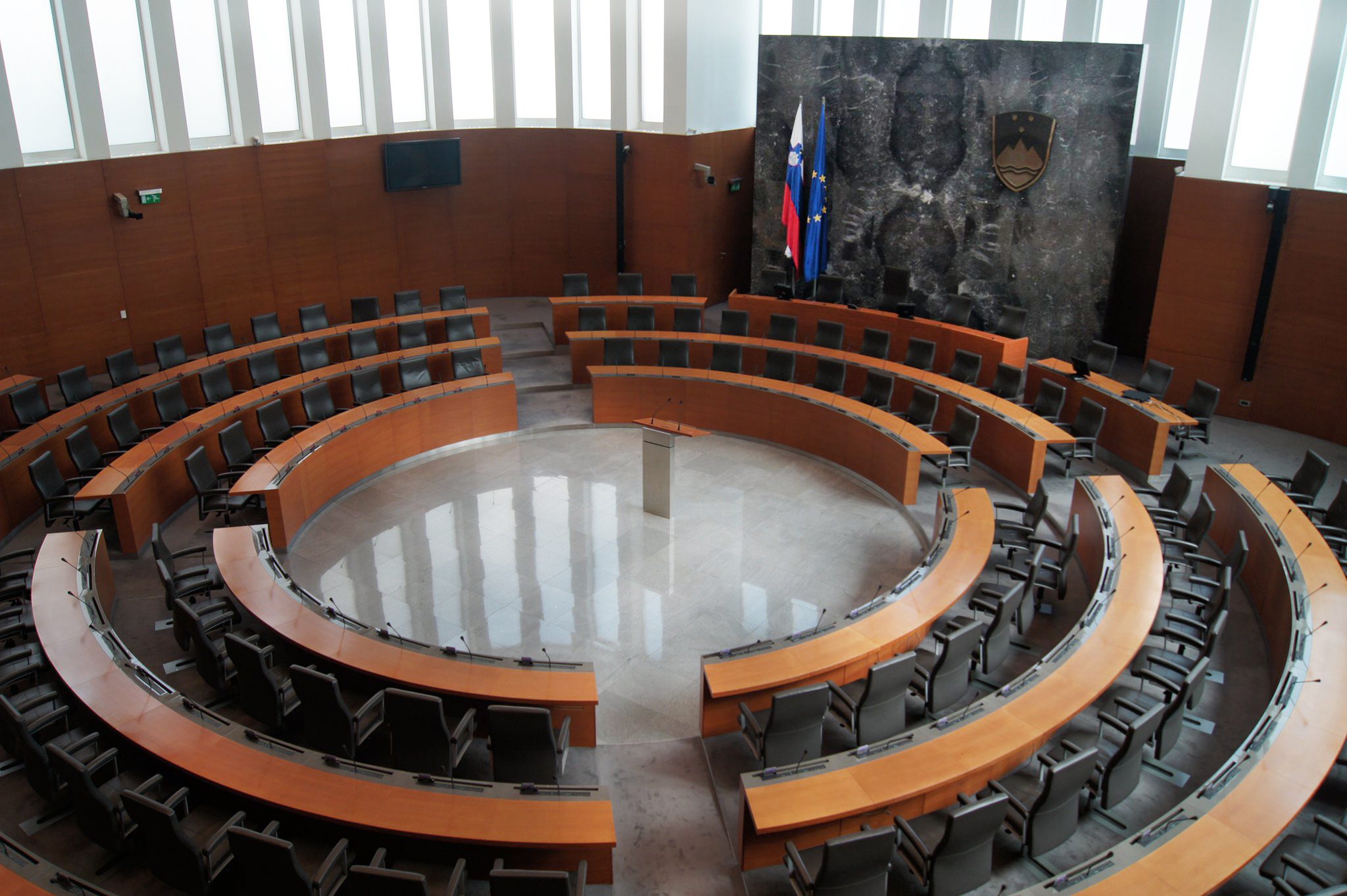
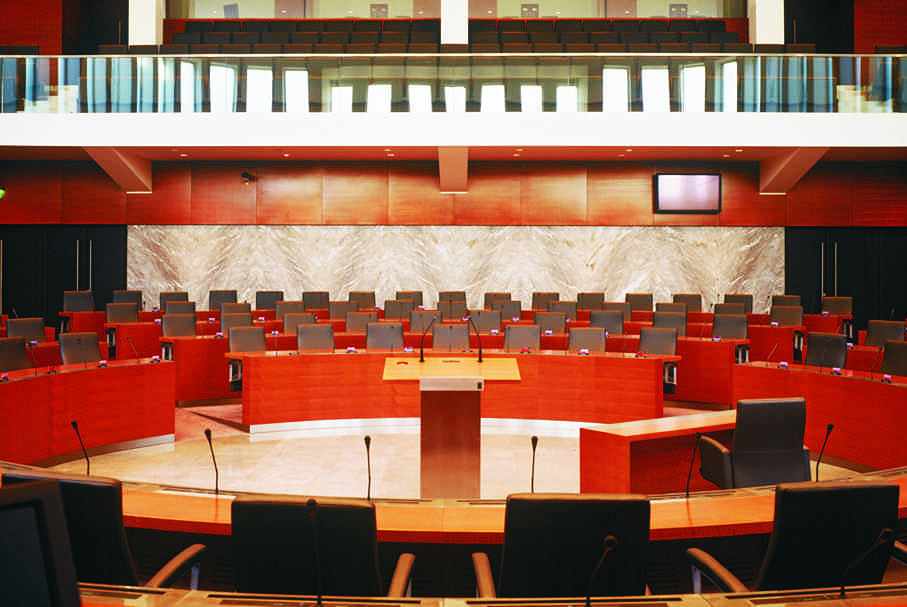
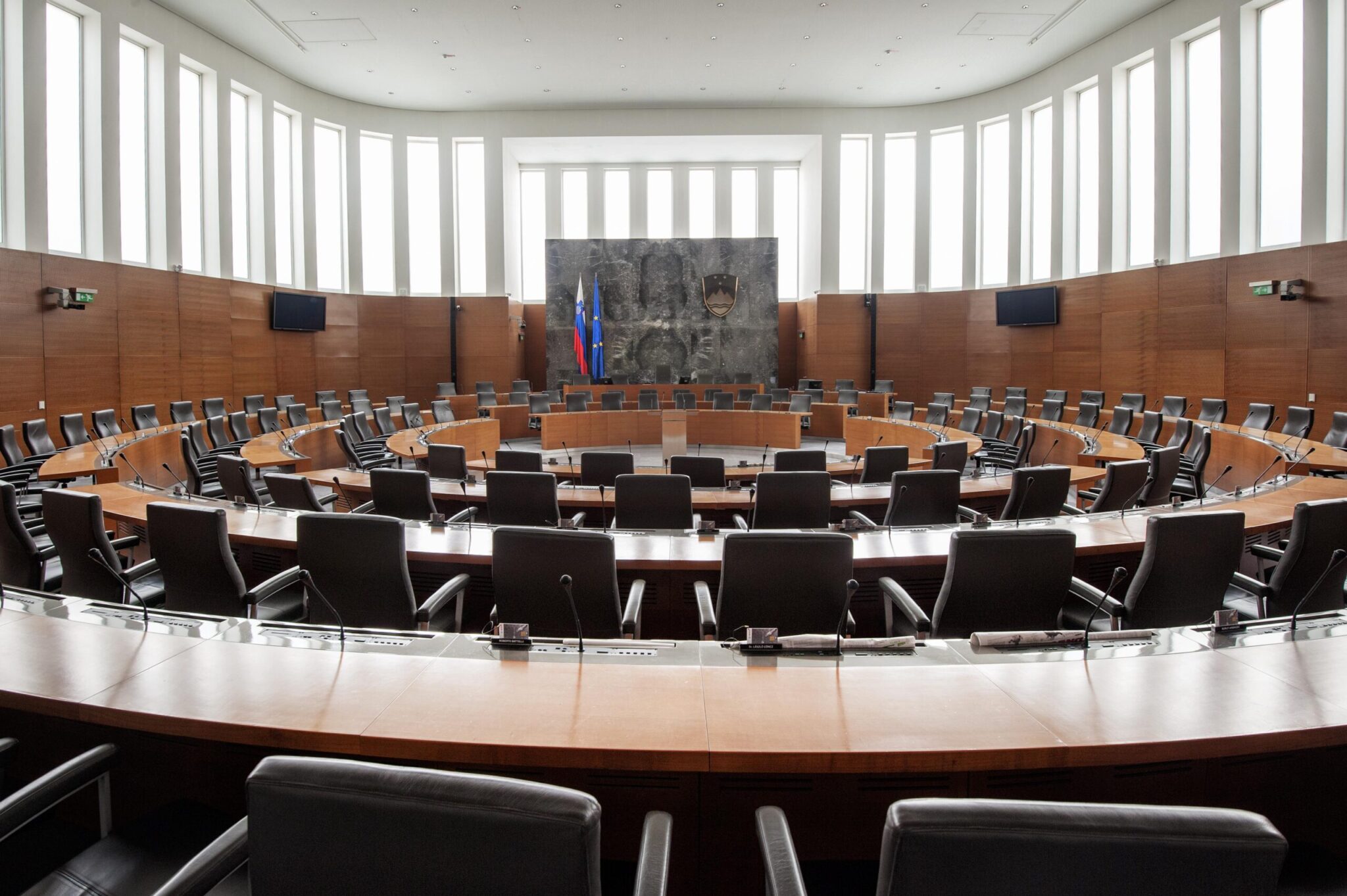
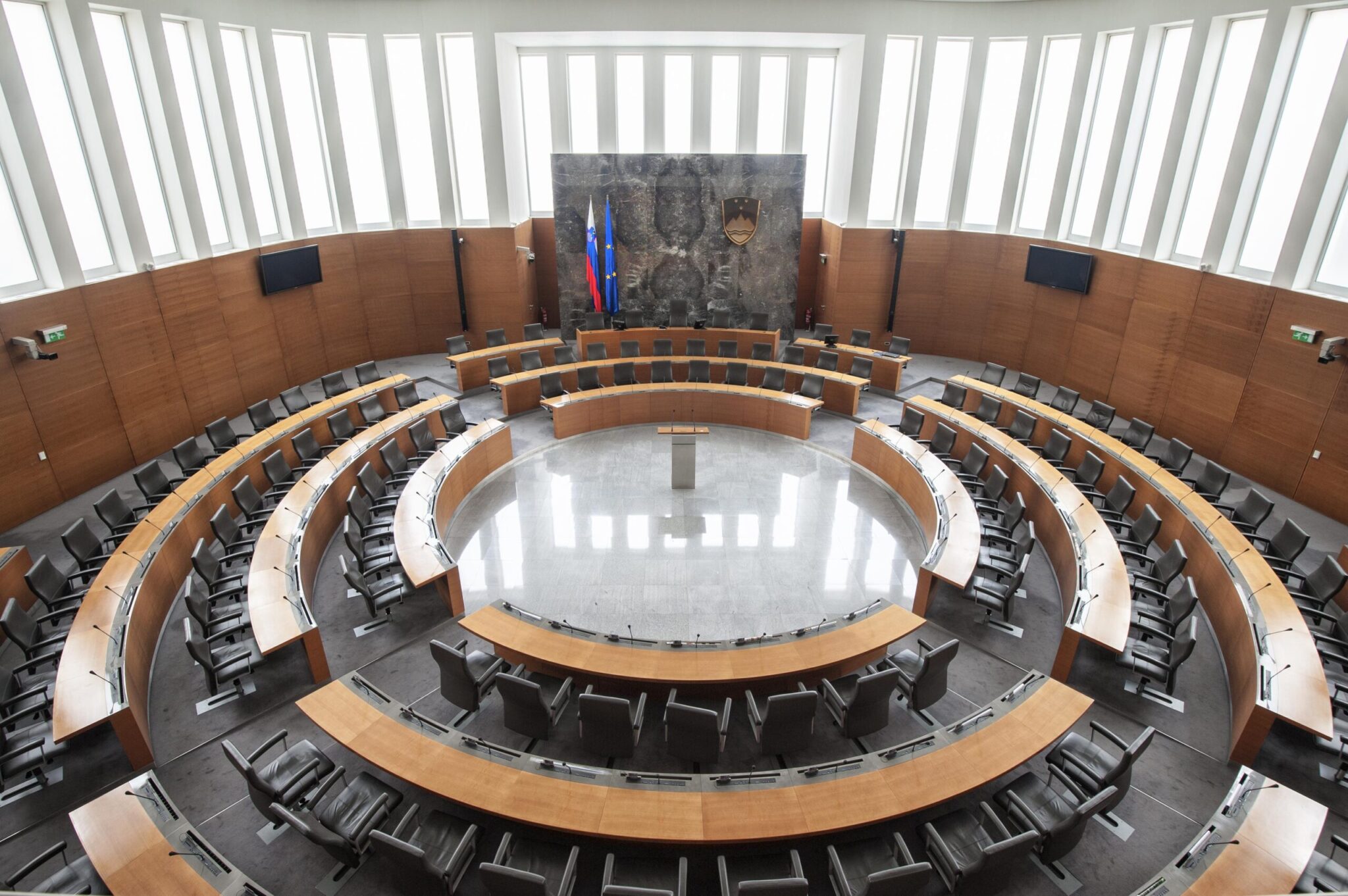
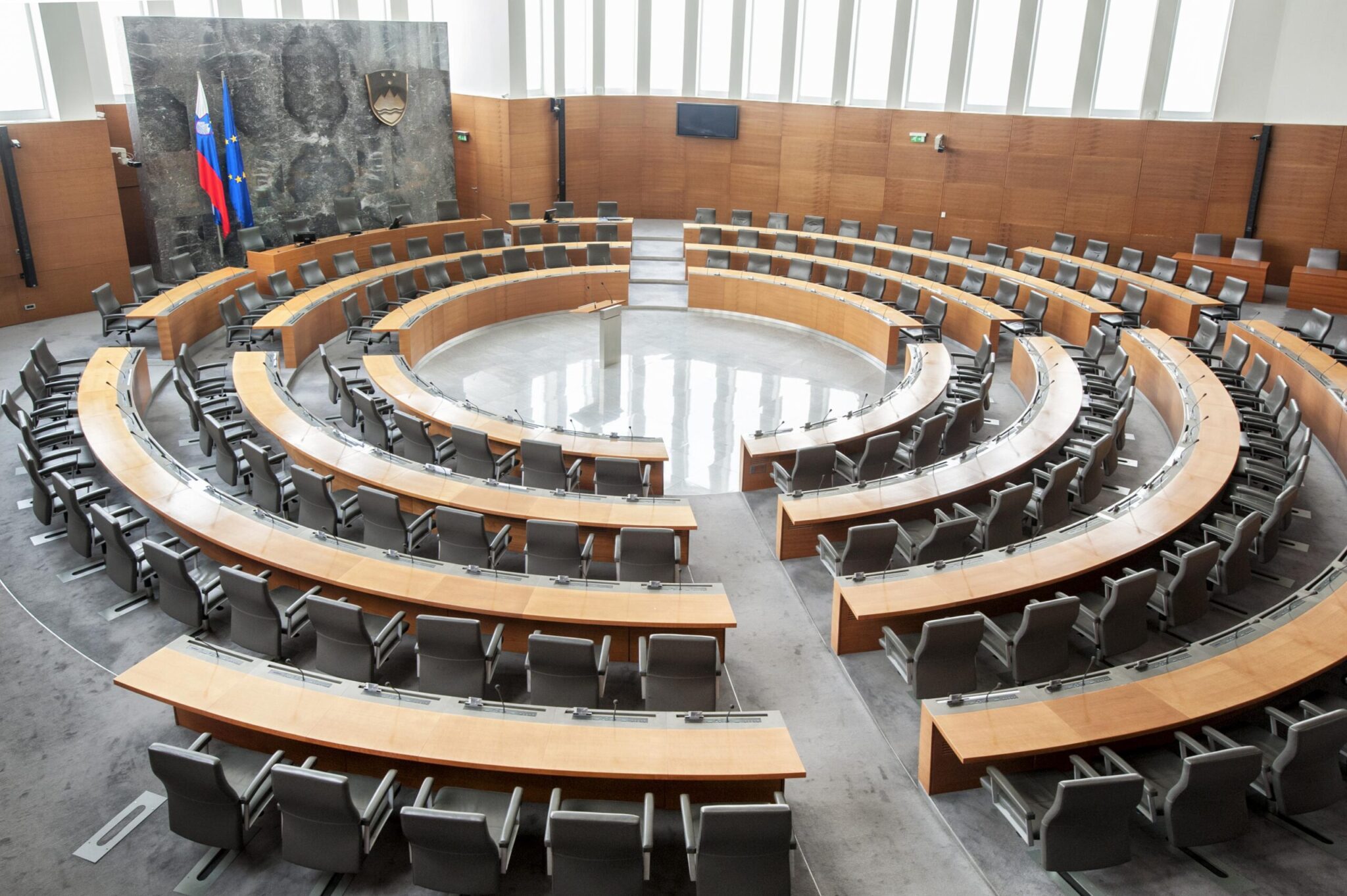
The parliamentary chamber is circular, with seats arranged in orthogonal rows. The circular shape is the only one that theoretically allows complete equality among all points. The center of the chamber symbolises the heart of national decision-making, with members seated around it like elders gathered beneath a traditional Slovenian linden tree. Granite paving marks this symbolic center, beside which stands the speaker’s podium used only by the president and guests.
Seats are arranged in three or four rows. On the northern side sit the parliamentary presidency and government, while members of parliament occupy the southern two-thirds. Instead of 90 seats, there are 120—reflecting political ambitions to secure well-paid positions for 30 additional colleagues. Behind the seats of the presidency and government rises a massive stone wall, marred by an uninspired national coat of arms still seeking its visual identity.
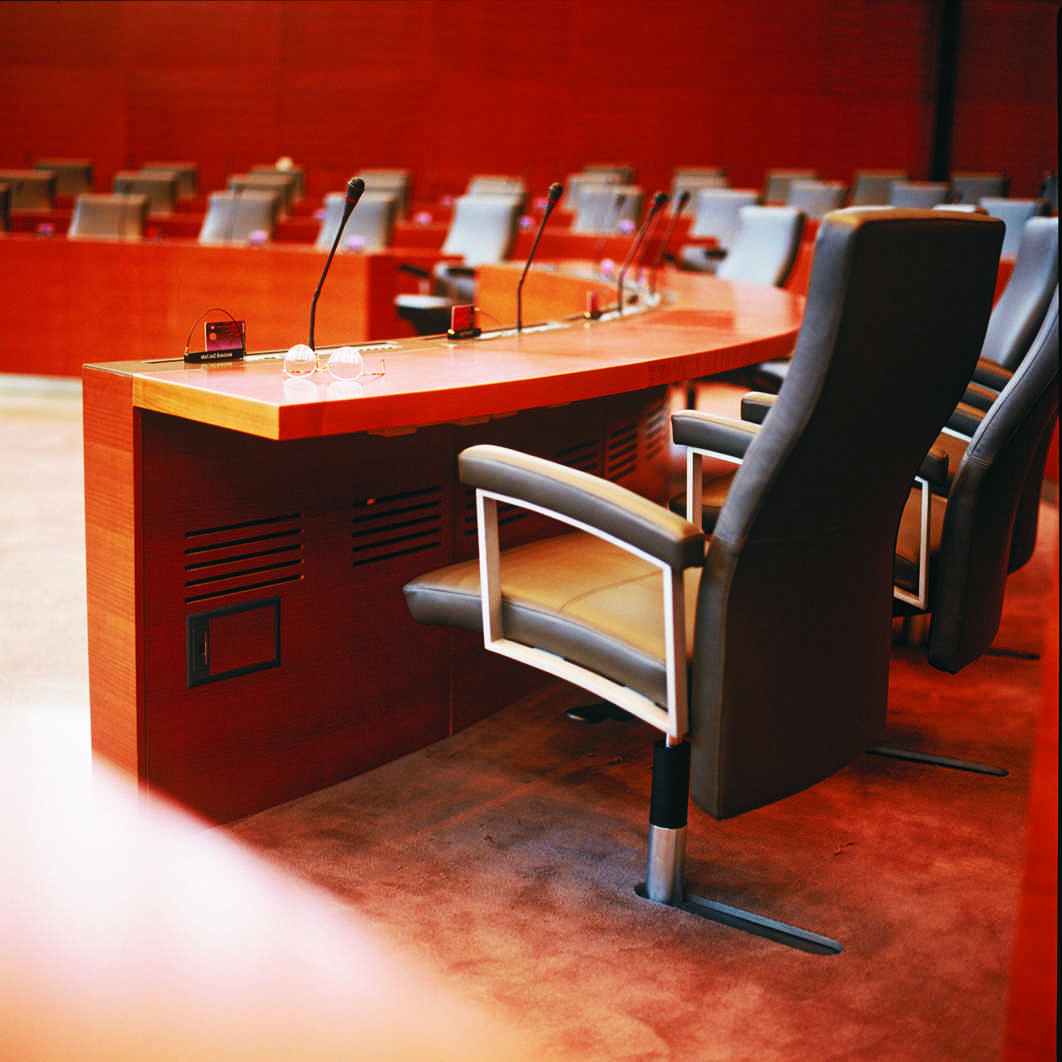
The new interior of the chamber is brighter and more spacious—natural materials, clean lines, and thoughtful design dominate. Members sit in leather armchairs (produced by Stol Kamnik) with automatic mechanisms that move them away from the desk and return them to their original position. Each desk is equipped with electronic tools: a slot for an ID card, headphones for translation, a microphone, voting buttons, and even a vent for climate-controlled air. Microphones allow members to speak without leaving their seats, though some lament the loss of dramatic podium speeches. They also miss chairs suitable for napping and hidden shelves for reading material not meant for parliamentary debate.
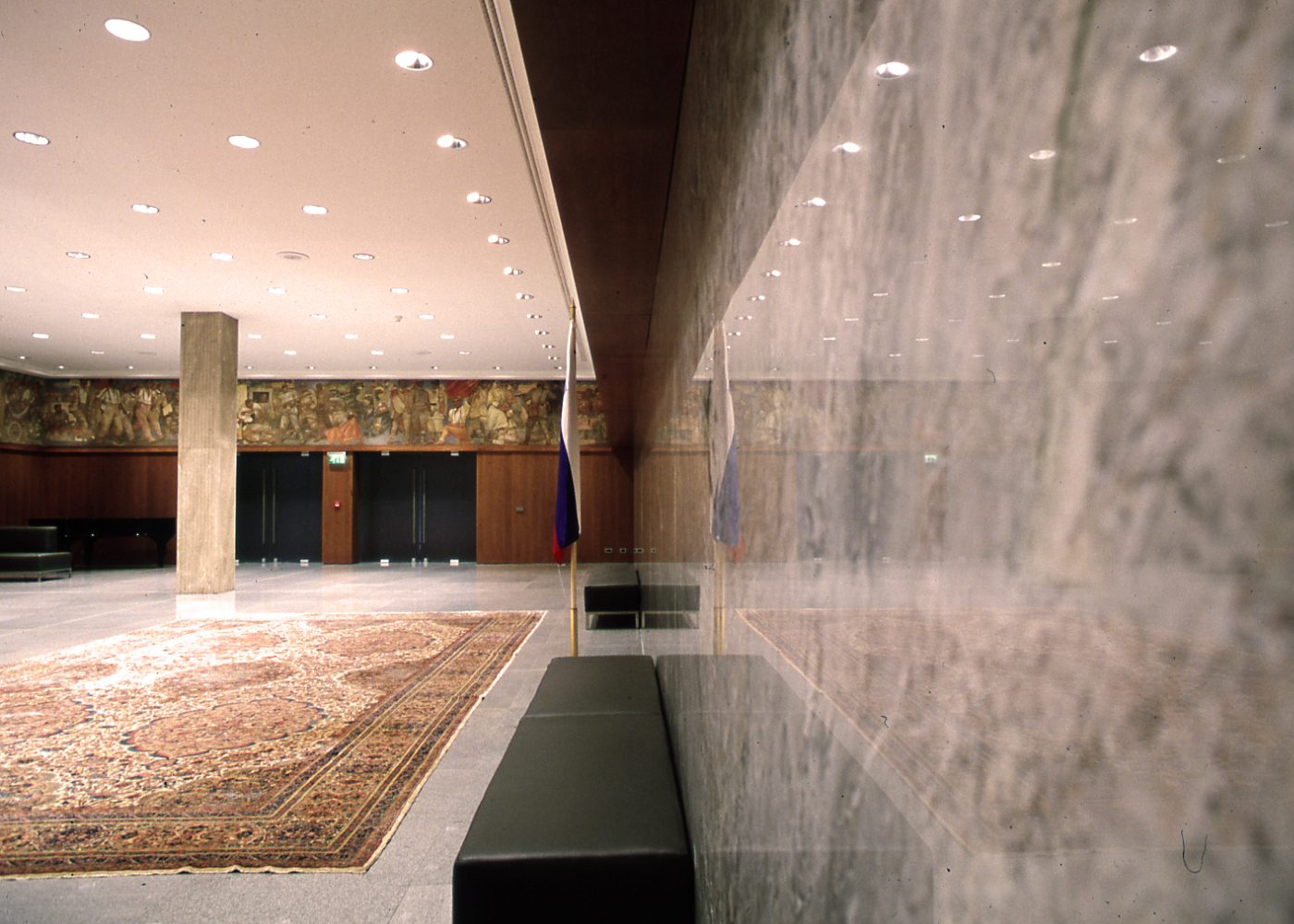
Architects also renovated two lobbies. The lower one features a protected fresco with a socialist-realist theme that required careful adaptation. Walls are clad in stone and cherry wood, with simple seating arrangements in the corners. The upper lobby benefits from zenithal lighting, and its wall cladding of Lipica stone—grooved horizontally—gives the space an elegant texture.
Renovating the main parliamentary chamber was no simple task. Given its significance, it posed a major responsibility for any designer. Despite doubts about the lesser-known architectural team, Sonja Miculinić and her collaborators proved that contemporary Slovenian parliament architecture can be functional, symbolic, and aesthetically refined.